What the recording light can show
Ray-Ban Meta glasses have a capture LED on the front of the frame that the wearer cannot switch off. In July 2026, Meta pushed an update intended to detect a covered or damaged light and disable the camera.
The update's effectiveness is contested. The Guardian reported on 19 August 2026 that a working market for disabling the light remained. Modification services said their work still functioned on current models after the update, and a journalist reported success with an inexpensive sticker. Meta maintains that a covered or damaged LED disables the camera.
Even a perfectly functioning safeguard would leave a bystander uncertain. The light is small and sits on one side of the frame, where daylight or venue lighting can obscure it. An angled wearer or a crowd can put the signal out of view. Seeing no light proves nothing.
Why the frames are hard to identify
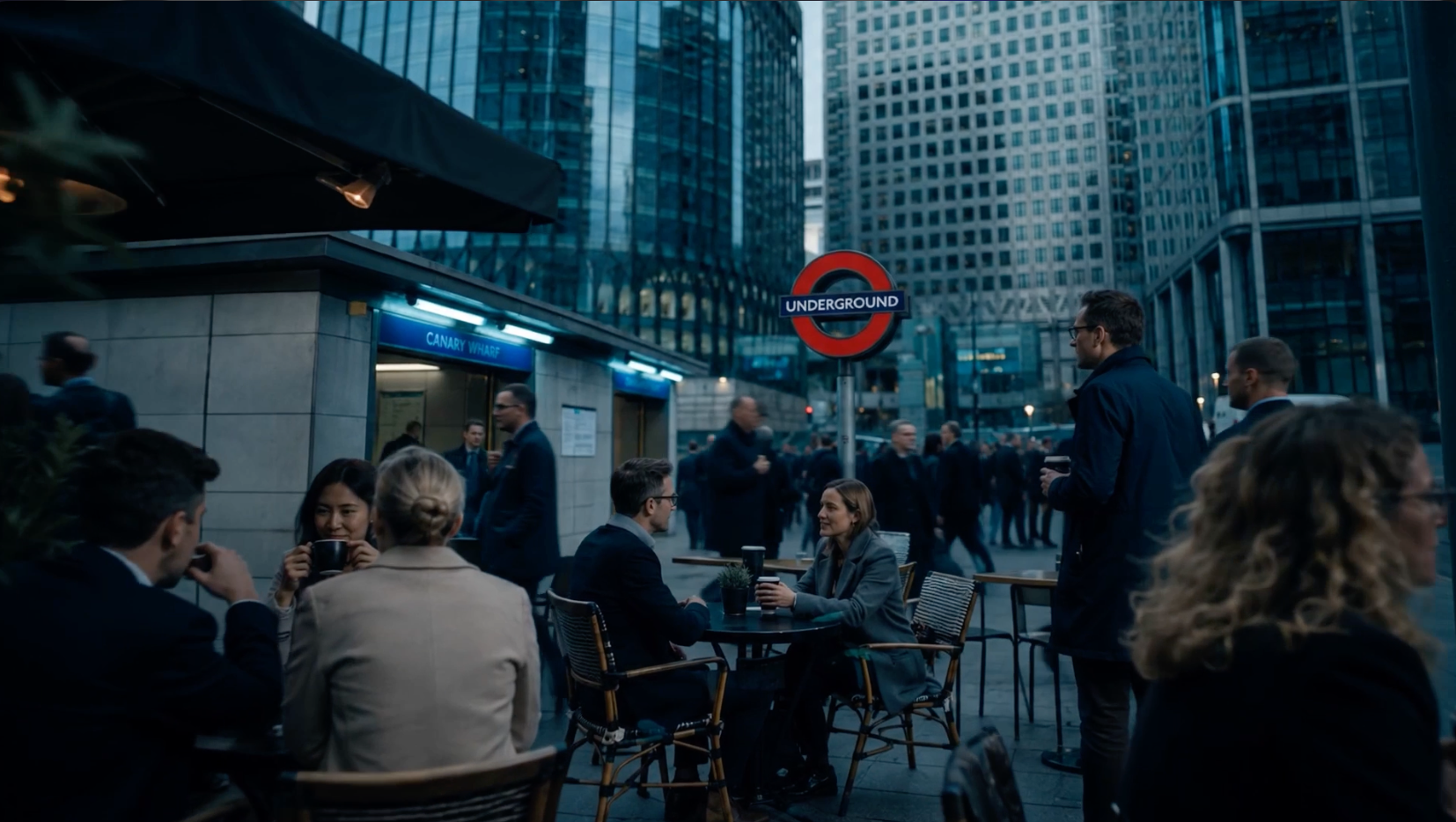
Current models use standard eyewear frames from established brands. Their commercial appeal depends on looking ordinary. At conversational distance, the camera housing in a corner of the frame can pass for a design detail.
That ordinary appearance lets recording enter living rooms and medical waiting rooms, along with doorstep transactions with a stranger. Identification by eye worked when wearable hardware looked unusual. It became unreliable once the hardware looked like eyewear.
Why asking the wearer is inconclusive
Asking directly remains worthwhile, but honesty does not guarantee accuracy. These devices have no screen. Their state is conveyed by a chime or voice line, or through a phone app that may stay closed during the conversation.
A session may fail to end as expected. The wearer can sincerely say that no recording is occurring and still be wrong.
What a Bluetooth scan detects
Many devices broadcast Bluetooth Low Energy advertising packets. NearLens and open-source detectors that appeared this year match those packets against known product signatures.
The result gives a floor and cannot give a count. Devices rotate their broadcast address, allowing one pair to appear as several entries. Because identification relies on a manually maintained signature list, unbranded hardware remains invisible until someone adds it. Advertising behaviour varies by model and connection state; NearLens has not verified one connected-state rule across every model it tracks. A scanner also cannot read firmware. It may identify hardware, but not what that unit is doing.
When a scan finds nothing, that is all a responsible tool can report. It cannot report that nobody is nearby.
Use rules where signals fall short
Treat the light as one signal, not a guarantee. The wearer's answer may be sincere but unverified. A scan can establish only that compatible radio activity was or was not observed.
In changing rooms and clinics, or during support meetings, a posted rule may do more than detection. Staff can enforce what is permitted without requiring a bystander to interpret a light or radio packet.
The signals answer separate questions. An illuminated LED can show the device's intended capture state. A direct answer gives the wearer's understanding, while Bluetooth can suggest that a compatible broadcaster is nearby. None reveals the full path from capture through storage to sharing.
Asking may be practical in a casual public encounter. In a clinic or changing area, a posted rule and staff response are more realistic. A partial observation should never be turned into an all-clear.