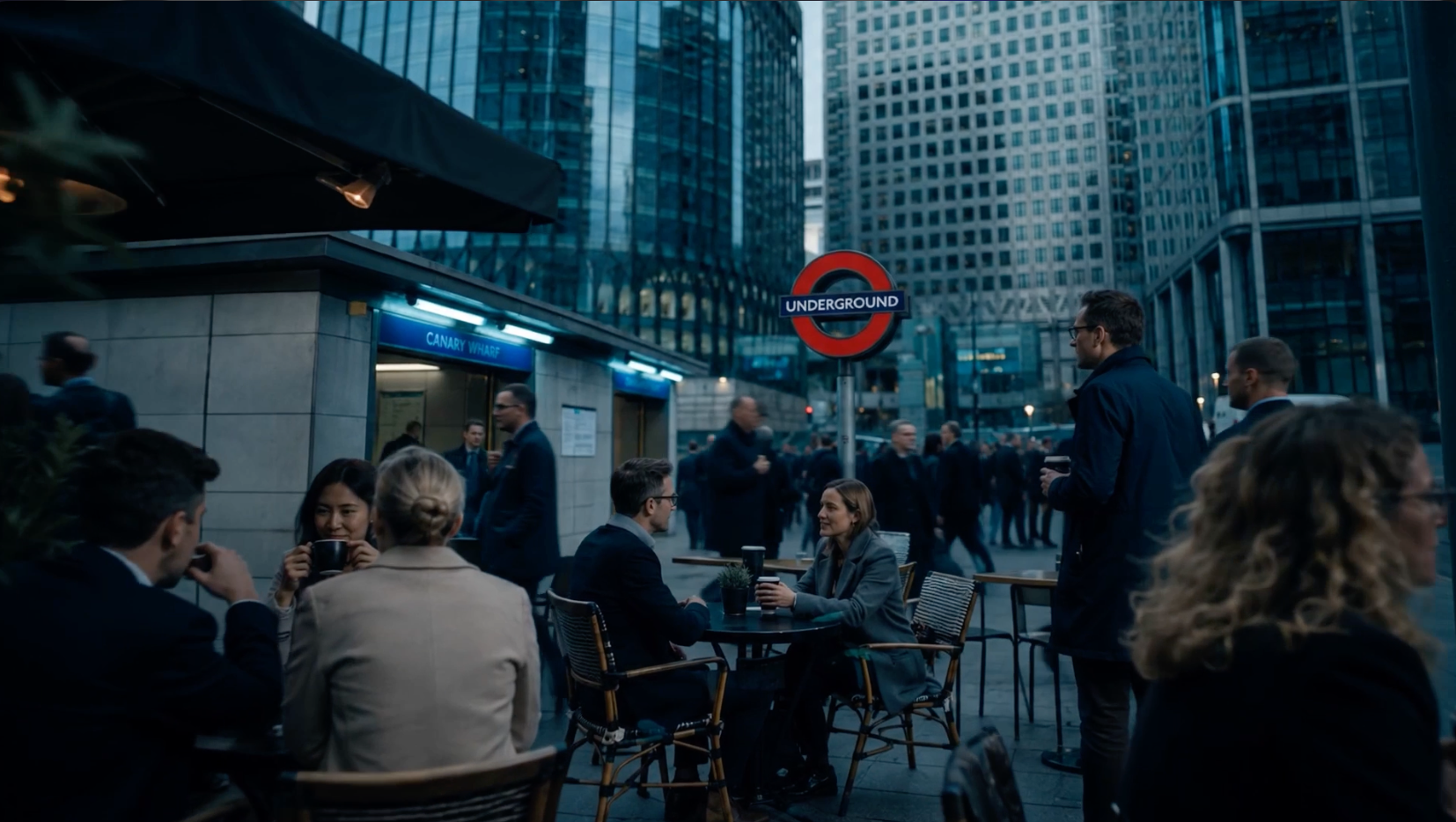
The gesture was part of the warning
For most of the history of cameras in public, operating one was visible. Someone raised a phone, framed a shot and held still for a second. Nobody designed that as a privacy feature. It became one because taking a picture looked different from standing there.
Camera glasses reduced that gesture to a touch on the temple. Wrist-worn controls that read small finger movements take it further. UX Collective considered where wearable controls were heading after Meta Connect 2025. The input model that wins will decide how much of an interaction remains observable from outside it.
Ease for the wearer removes context for the room
This category judges input by whether it feels fluid to the wearer. That means quick, unobtrusive and usable while carrying groceries. From across the room, the same quality means invisible.
A bystander standing two metres away has never had much to go on. There was at least a hand moving towards a face. Once that goes, notice rests almost entirely on a small light whose limits are already well understood.
Put legibility in the input specification
When capture can begin with a movement nobody can see, brightness is no longer the whole design question. Designers must decide whether that interaction model belongs on a device worn in shared space and what compensates for the lost cue.
A useful test comes before visual design. Can a nearby stranger tell that an action occurred? Most current proposals cannot meet it. Nobody has shown how to make input legible to the room without making it worse for the wearer. A single LED cannot simply be assigned that unfinished job.
Input and the capture indicator should be evaluated together. A visible gesture gives context before an indicator is noticed; a silent gesture makes its placement, brightness and meaning carry more weight. Neither proves capture occurred, but each affects whether a bystander can respond in time.
Accessibility complicates the same question. A gesture easy for one wearer may be unavailable to another, while a visible signal may be inaudible or imperceptible to a bystander. Testing across those conditions tells us more than treating concealment as product quality.