Articles
Reporting and analysis on recording, recognition, consent, Bluetooth awareness and the shared-space questions raised by wearable technology.
-
Engineering
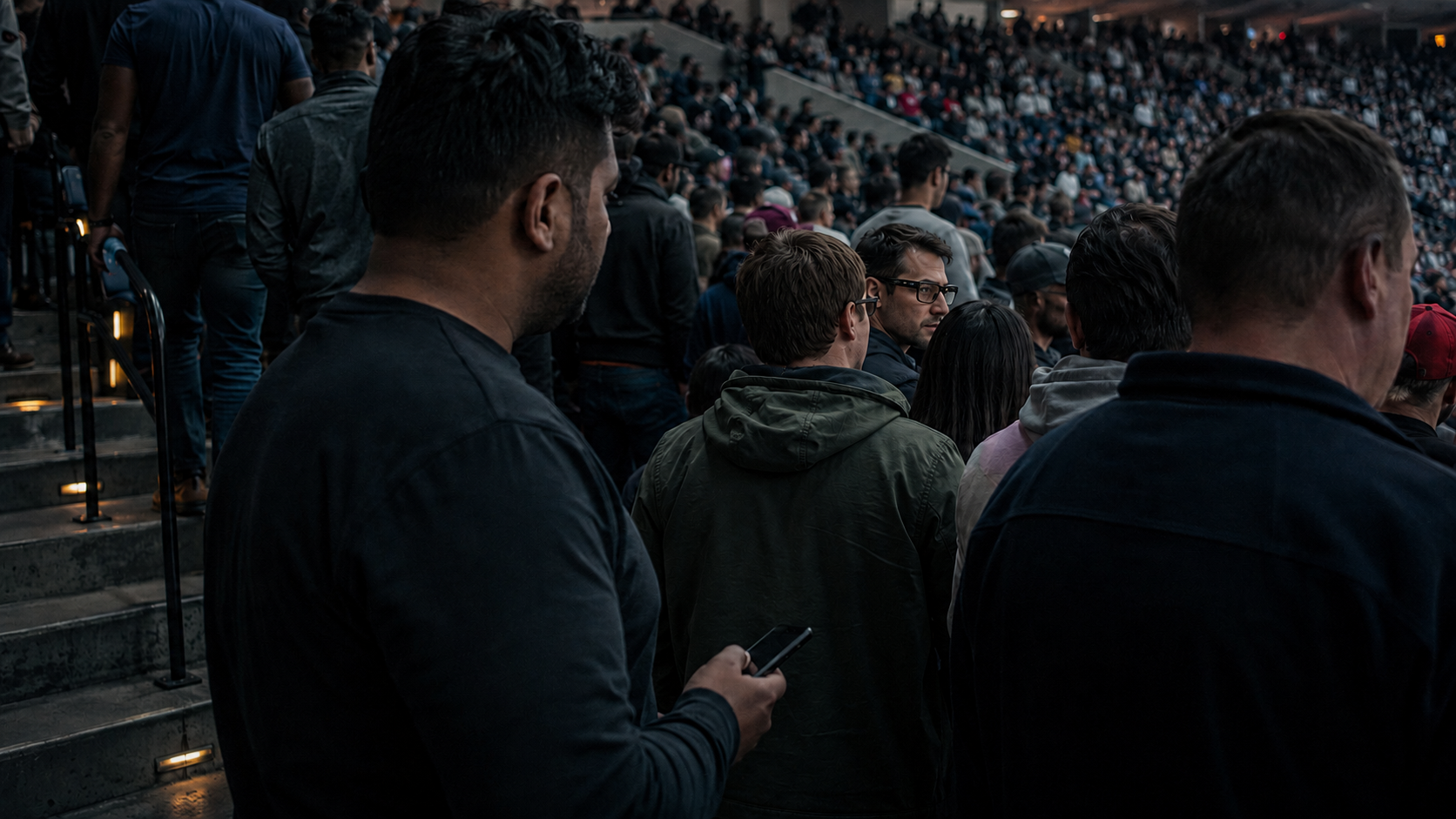
A Bluetooth Scan Gives You a Floor, Never a Count
Address rotation, vendor payloads and connection state all work against detection. Any number a scanner reports is a minimum.
-
Workplace deployment
The Bystander Who Cannot Leave the Room
Enterprise rollouts put camera glasses on people who did not choose them, in front of people who cannot walk away.

-
Firmware and capability
The Glasses You Learned to Recognise Are Not the Ones in Front of You
Capability arrives by update, so any social norm calibrated to what a model can do expires quietly.

-
Device design
The Wearer Cannot See the Device Either
The mainstream form factor has no display, which leaves the person wearing it with no reliable way to check what it is doing.

-
Data destination
The Cloud Behind the Glasses Is a Dropdown
When a wearer can switch which AI provider processes what the camera sees, the question of where an image goes has no stable answer.

-
Hardware safeguards
The Only Control a Stranger Can Verify Is a Physical One
Software promises cannot be checked from two metres away. A cover over a lens can.

-
Policy
A Right Nobody Is In a Position to Invoke
Enforcement of privacy law depends on someone knowing they were recorded. Wearable capture is built so that they do not.

-
Compliance
Nobody Files the Assessment for a Camera on a Face
Large-scale monitoring of public areas already triggers a data protection impact assessment. The trigger points at a controller who does not exist here.

-
Canada
Canadian Privacy Law Has No One to Regulate Here
Federal private-sector law reaches organizations engaged in commercial activity. A person wearing camera glasses on a sidewalk is neither.

-
Risk distribution
The Average Bystander Does Not Exist
Notice policy is being written for a median person who faces no particular consequence from being recorded. Almost nobody is that person.

-
Law enforcement access
The Footage Belongs to Someone Who Can Simply Hand It Over
Doctrine limiting government access to data held by companies does not reach recordings held by the person who made them.

-
Global governance
The Norms for Public Space Are Being Set by Two Supply Chains
Whatever a device does by default arrives in every country at once. Regulators show up after the convention has already formed.